+86 18203993035
info※※com



+86 18203993035
info※※com

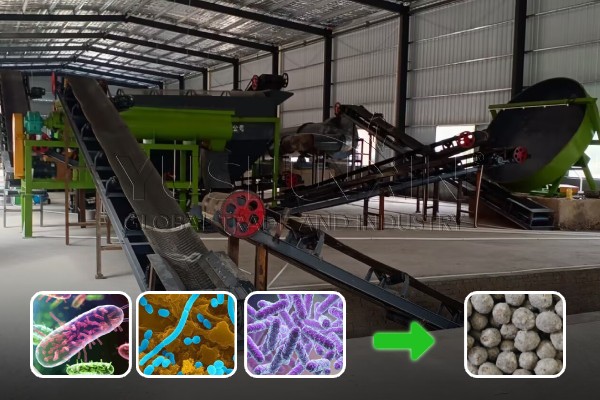
To supply nutrients to the growth of crops and plants more efficiently, it is necessary to start the production of biofertilizers. This is because it can improve the ability of plants to absorb nutrients through the vital activity of the microorganisms it contains.. However, compared to the organic fertilizer manufacturing, the biofertilizer process is more complex. In addition to fertilizer production, It is also essential to focus on the addition of microorganisms.Then, How to make biofertilizers fluidly? for this, There are various fertilizer machines that you can choose from., which help you easily and quickly complete the production of biofertilizers in powder or granules.
Learn moreIn general, There are two types of organic biofertilizer production solutions that are commonly used in the establishment of biofertilizer plant..
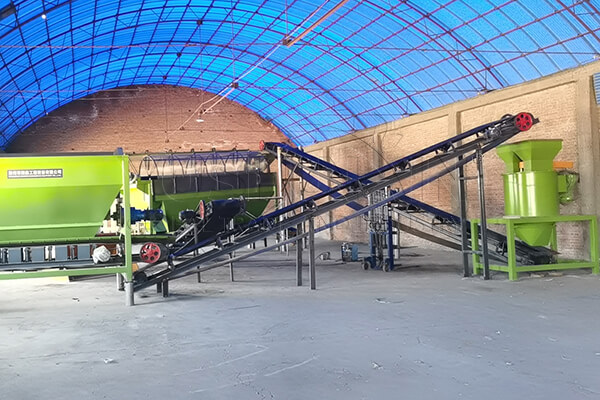
If you need an economical biofertilizer production plan with a simple process, you can purchase our manufacturing line of organic biofertilizers in powder form.
Only with composting machine, feeder, crusher, mixer, sifter and packaging equipment, you can transform organic waste into quality biofertilizers. Free quote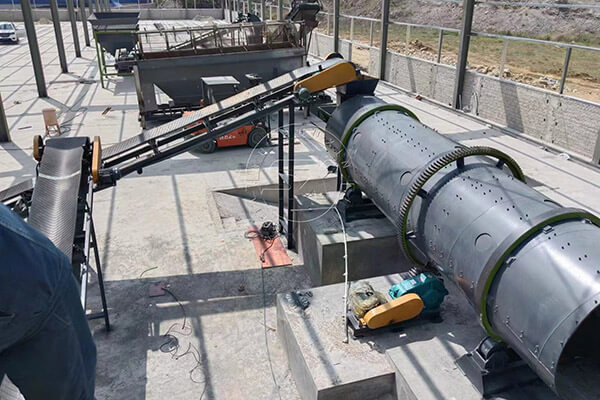
Besides, we design a fertilizer granulation line for the preparation of biofertilizer granules.
Processes composted material by shredding, mix, granulation, screening, drying, cooling, coating and packaging. This helps you make biofertilizers with balanced nutrients, longer storage time and better fertilizer effect. Free quoteComposting plays a crucial role in the production of organic biofertilizers, since it eliminates harmful substances and bad odors from manure. How then to improve the fermentation of industrial biofertilizers?? In addition to adding microbial composting inoculants, It is essential to use a professional composting machine. It can turn the materials regularly, supply oxygen and dissipate excessive heat, which favors better aerobic fermentation. At the moment, There are two compost turners that are very popular among biofertilizer manufacturers.:
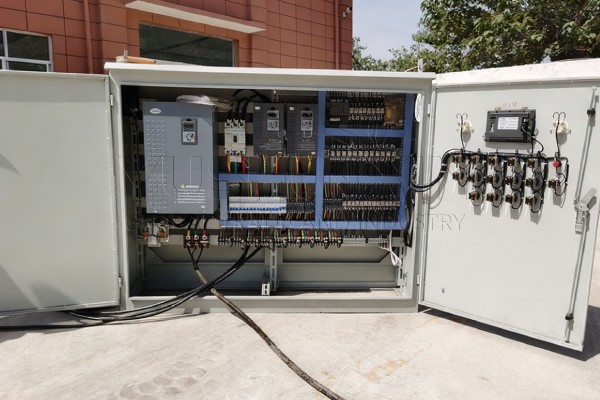
If you want to buy equipment for large-scale biofertilizer composting, We recommend our wheel type composter. It has a turning width of 10 a 30 m and a depth of 1 a 2 m, allowing it to process more organic material than other machines in the same time. Besides, to help you complete fermentation quickly, It is equipped with an automatic electrical control system, that moves on side rails without the need for manual operation.
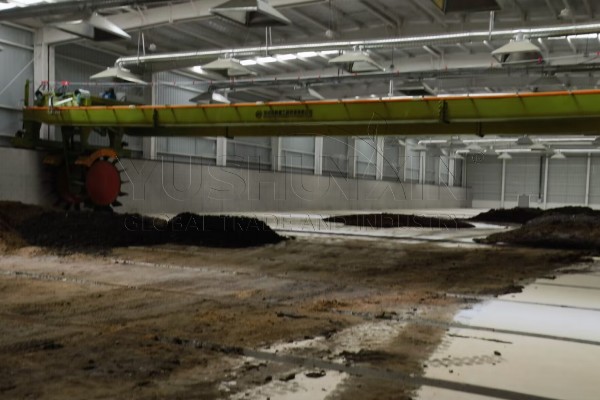
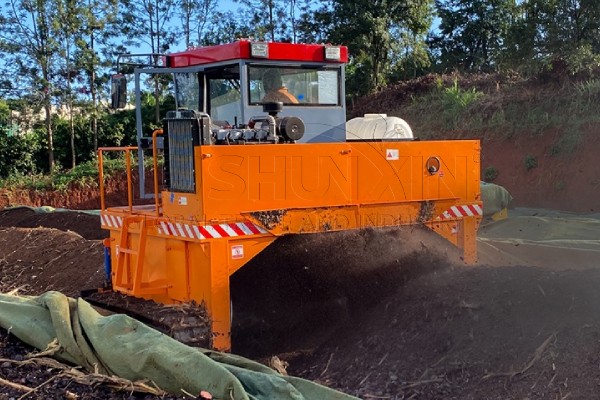
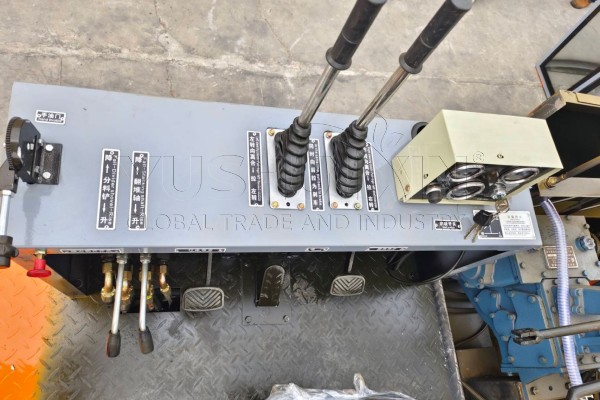
If you want to produce biofertilizer compost on a small scale, We also offer the row turner. Can process piles 2.4–3 m wide and 0.6–1.5 m high, which is equivalent to between 500 y 1.500 m² of biofertilizer per hour. Besides, It is characterized by its easy handling. Even a semi-skilled worker can easily drive to compost large amounts of fertilizer piles on flat ground..
To facilitate transportation, storage and sale, most plants prefer to process the biofertilizer into pellets. For this, It is essential to acquire a fertilizer granulation equipment appropriate. We recommend two machines: stirring tooth granulator and rotary drum pelletizer.
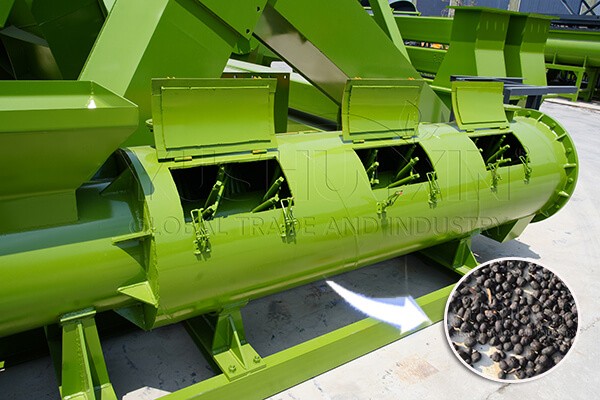
If you need a small scale granulator for biofertilizer processing, agitating tooth granulator is ideal. Its capacity of 1–8 t/h fully meets the requirements of small operations. Besides, as based on the mechanical force of the agitator tooth shaft, The final granules have high hardness and better handling resistance.
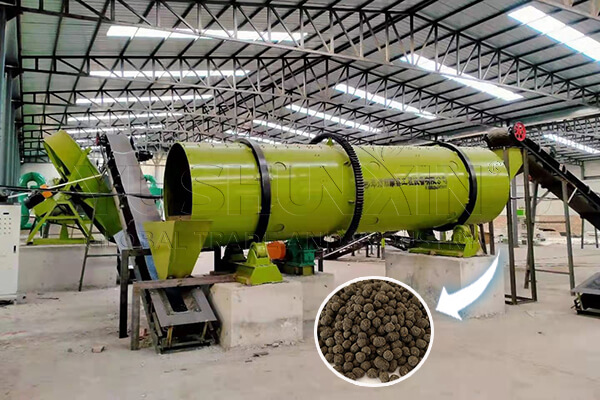
When it comes to large-scale biofertilizer granulation, we recommend you choose rotary drum granulator. Allows you to produce up to 30 tons per hour of biofertilizer granules. With rubber coating design, cleaning holes and riser plates, guarantees less adhesion, Longer durability and better granulation efficiency.
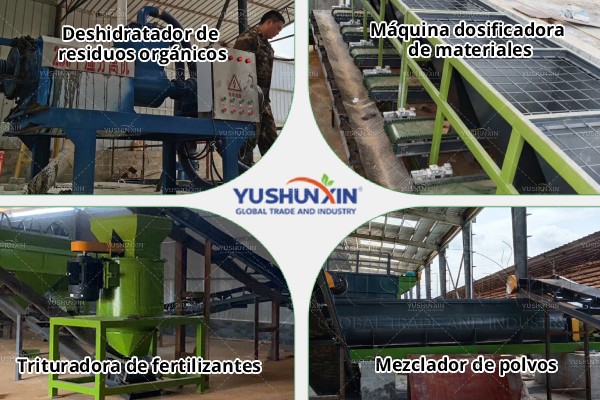
manure dehydrator: This equipment allows you to quickly reduce manure moisture between a 30 % and a 50 %, which facilitates the production of compost for biofertilizers.
This machine doses raw materials according to your needs, allowing you to produce biofertilizers adapted to local agricultural conditions.
This machine is widely used to grind agglomerated materials into fine powder. It is essential for composting and granulation in the production of biofertilizers.
This machine allows you to evenly mix different raw materials, which is key to obtaining a biofertilizer with a balanced nutritional content.
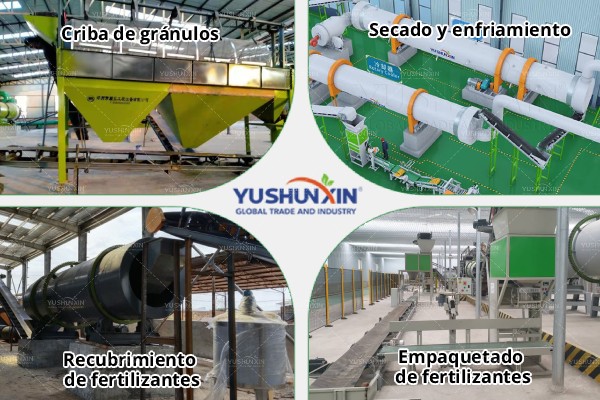
Compost screening is designed to separate the biofertilizer you need from the one that doesn't meet the requirements. Then, You can return products that do not meet the requirements for reprocessing.
Dryer and cooler further remove excess moisture from your granular biofertilizer, so that it meets international water content requirements (14%).
The coating machine adds a protective film to your biofertilizer granules, which prevents sticking and nutrient loss.
This is the final step in the production of biofertilizer. After processing it with our automatic packaging machine, can transport, store and sell your biofertilizer more easily.
The use of microbial strains is the core of the preparation of biological fertilizer. They are generally divided into two types: composting inoculants and functional bacteria, which are added at different stages.
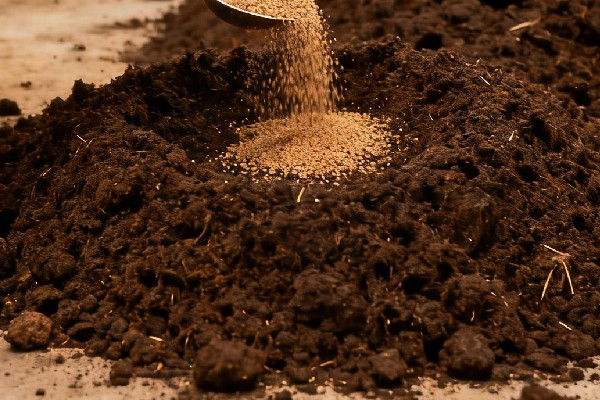
Como su nombre indica, Microbial composting inoculant is widely used in biofertilizer composting process. Facilitates composting of manure and eliminates its odor. Generally, This microbial agent is a bacterial complex that includes photosynthetic bacteria, lactic acid, yeasts, actinomicetos, penicillium o trichoderma.
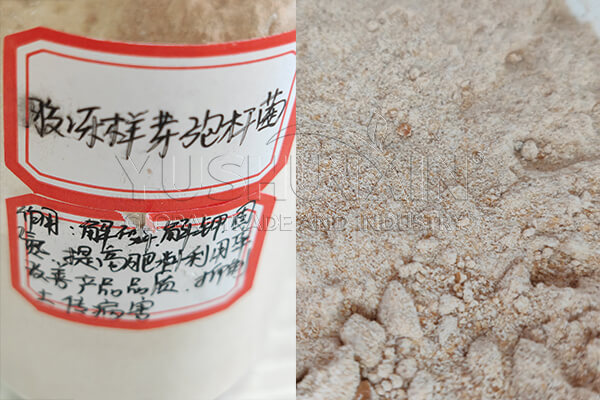
Functional bacteria should be used after composting, since high temperatures destroy them. They contain azotobacter, phosphobacteria, silicate bacteria, lactic acid bacteria, pseudomonas, actinomicetos, etc. These bacteria play different functions in the production of biofertilizers. You can choose the ones that best suit your needs..
In the biofertilizer manufacturing process, It is essential to choose the right moment to add functional bacteria. For this, it is necessary to take into account the following
When producing powdered biofertilizers, The ideal is to add the functional strains after composting. However, if you plan to make granular biofertilizers, It is recommended to spray the microbial agent after granulation (the coating is optimal). This way, functional bacteria are prevented from being damaged by high temperatures.
For the production of powdered biofertilizers, You can purchase a double shaft mixer, and for the production of high quality biofertilizer granules, a coating machine. Both have a spray device that allows precise addition of the bacterial agent.
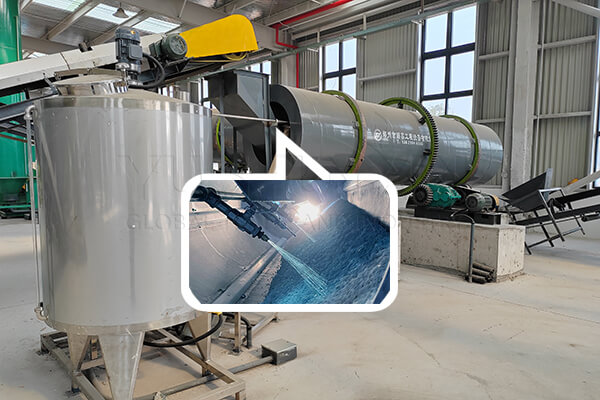
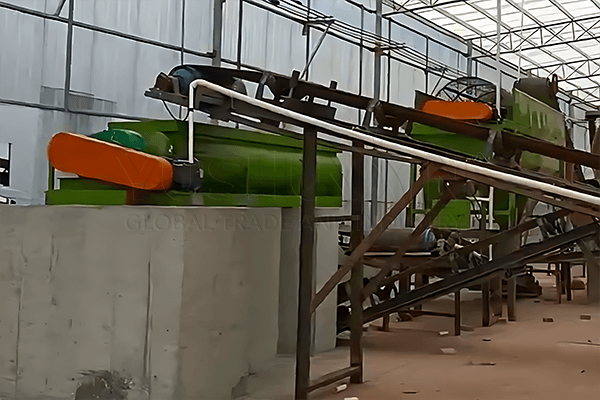
To produce high quality biofertilizers, it is necessary to control the temperature, humidity, the organic matter content and the C/N ratio.
When the temperature reaches 60 °C, he 80 % of microorganisms die. Therefore, after adding functional bacteria, The temperature of biofertilizer materials should be controlled below 50 °C.
Moisture is essential for microbial activity. For this reason, during the manufacture of biofertilizers, it is necessary to adjust it to a suitable level, ideal for the production of granules and that favors the reproduction of microorganisms.
These factors also play an important role in the life of functional bacteria.. For the production of biofertilizers, It is advisable to control the content of organic matter between the 50 % and the 70 %, and the C/N ratio between 30 y 35:1.
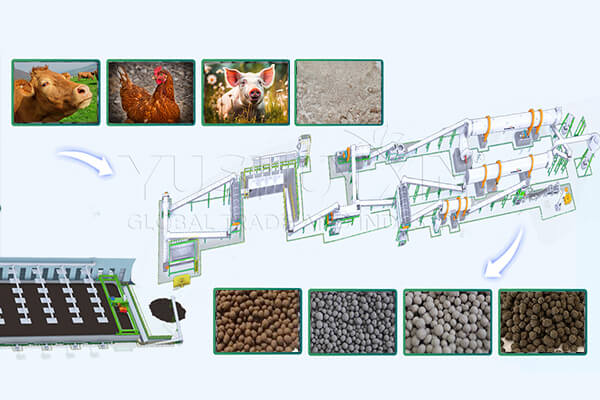
The main application of these systems is, indeed, the production of organic biofertilizers. Beneficial microorganisms are mixed with organic waste compost or carrier materials, which are then processed until obtaining powder or granules. These systems fully satisfy your needs. make fertilizer from cow dung, process chicken manure into fertilizer and produce fertilizers from pig manure, inter alia,, inter alia, thanks to beneficial microorganisms.
Can these solutions be used in the production of biocompound fertilizers? Of course. Both the powder and granular biofertilizer production plan can be used not only to produce organic biofertilizers., but also biocompound fertilizers. You only need to use a humic organic material as a bacterial carrier, like peat, meteorized carbon or lignite.
During the last 20 years, We have helped numerous manufacturers to set up their plants successfully.
Examples:
Organic Bio Fertilizer Plant in Pakistan
Annual production line 20.000 tons biofertilizer granules in India.
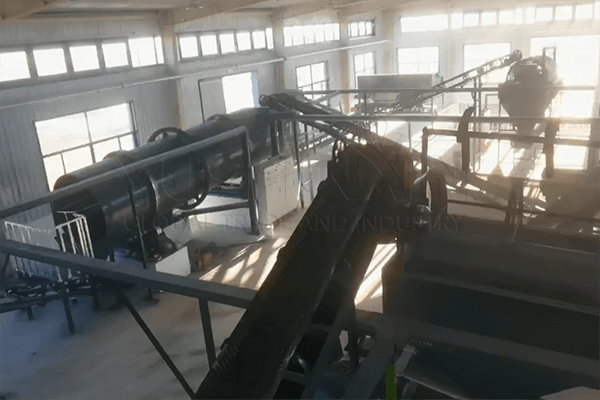
According to the experience of our clients, we summarize some frequently asked questions:
How to start the preparation of Rhizobium biofertilizer?
Las 3 main biofertilizer production technologies
Steps to install a biofertilizer unit
If you have more requirements or want a personalized biofertilizer production plan design, contact us immediately. Besides, YUSHUNXIN also offers other business plans: biochar fertilizer production lines, compound fertilizer systems and granulation lines for organic fertilizers 100.000 t/year.

YUSHUXNIN Engineering Equipment Co., Ltd., business plan maker and equipment for fertilizer production in Türkiye. From the design of the project and the machinery manufacturing through installation and operational training, we offer you a comprehensive service.
NPK Fertilizer Manufacturing Production of SSP Phosphate Fertilizers Organic Fertilizer Solutions Biofertilizer Production Chicken Manure Management Bovine Waste Management
 Golf Island, PIK, Block J No.20, Jakarta 14470
 117208
Moscow, Cheratnovo Severnoye, c. Cheratnovskaya, BP room
117208
Moscow, Cheratnovo Severnoye, c. Cheratnovskaya, BP room 12417 E
Amherst Circle, Aurora, CO 80014, EE. UU.
12417 E
Amherst Circle, Aurora, CO 80014, EE. UU. Calle
Boudemagh Messaoud, lot number 45 - Cheraga
Calle
Boudemagh Messaoud, lot number 45 - Cheraga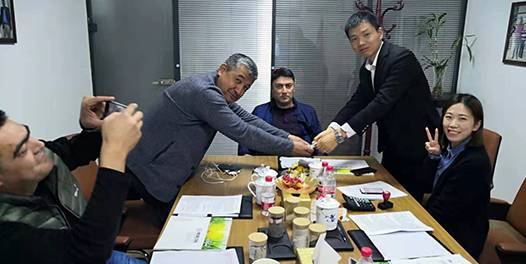 Tashkent public road, Taskent, Uzbekistan.
Get a free quote
 Contact
Contact
Contact
You cannot copy the content of this page


